As summer days wind down and back-to-school preparations approach, getting students back into an academic mindset becomes increasingly necessary. By gradually reintroducing mathematical concepts through hands-on activities during the last few weeks of summer vacation, parents and caregivers can ease children into the school year and help ensure greater academic success.
Here are a few easy ways to support the transition from summer break to school routines and teach practical math skills to elementary-aged children before heading back to class.
Bake cookies together
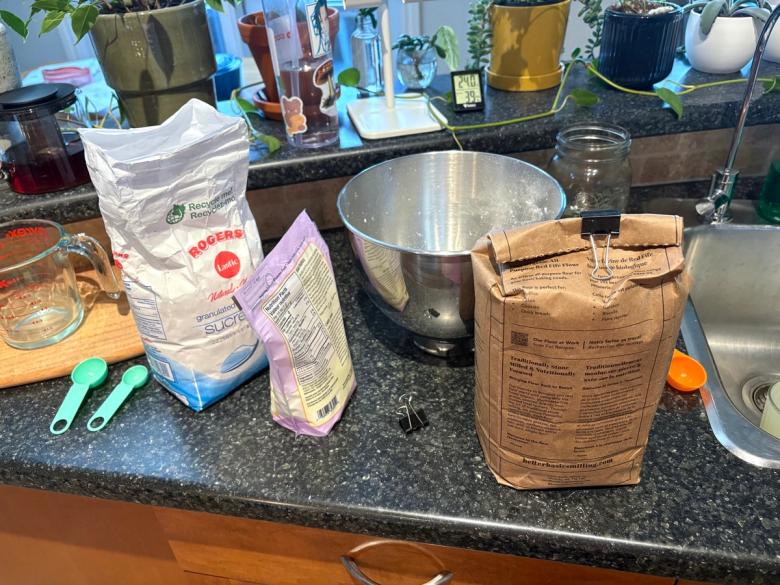
Baking a treat is an accessible way to support children’s developing math skills across many math and science concepts. Baking activities teach children ideas related to measurement, conversions, volume, viscosity, fractions, proportion, numbers, hypothesis and prediction, and chemical reactions. Children need to calculate ingredient amounts in teaspoons, tablespoons, cups, and litres, and use math to consider that there is more than one way to represent quantity depending on the units used. How many millilitres in half a cup? How do we make sure we have the correct amount of butter after cutting it as a solid and then melting it before pouring it into the bowl? If we want to substitute the butter for a dairy-free option, what amounts and types of ingredients do we need to ensure the right consistency for our tasty creations? What temperature should we preheat the oven to, and how do we convert between Fahrenheit and Celsius? What happens when baking soda instead of baking powder is added to a recipe?
Involve children from the start by showing them how to find a recipe in a cookbook or through an online search. This invites reading opportunities alongside the more technical aspects of baking, including making a list of required ingredients and checking whether they already have them at home. You can also teach money concepts by making a budget together and going grocery shopping for the required ingredients! Once in the kitchen and ready, encourage children to do most of the measuring, gathering, and mixing to maximize learning potential for this STEM (Science, Technology, Engineering, and Math) activity, while supervising and taking extra care with knives and when putting things in and taking them out of the oven.
The best part about teaching reading, math and chemistry through baking? Getting to eat the delicious desserts afterwards as a reward for all the attention to detail and hard work!
Go outside with a ruler or measuring tape
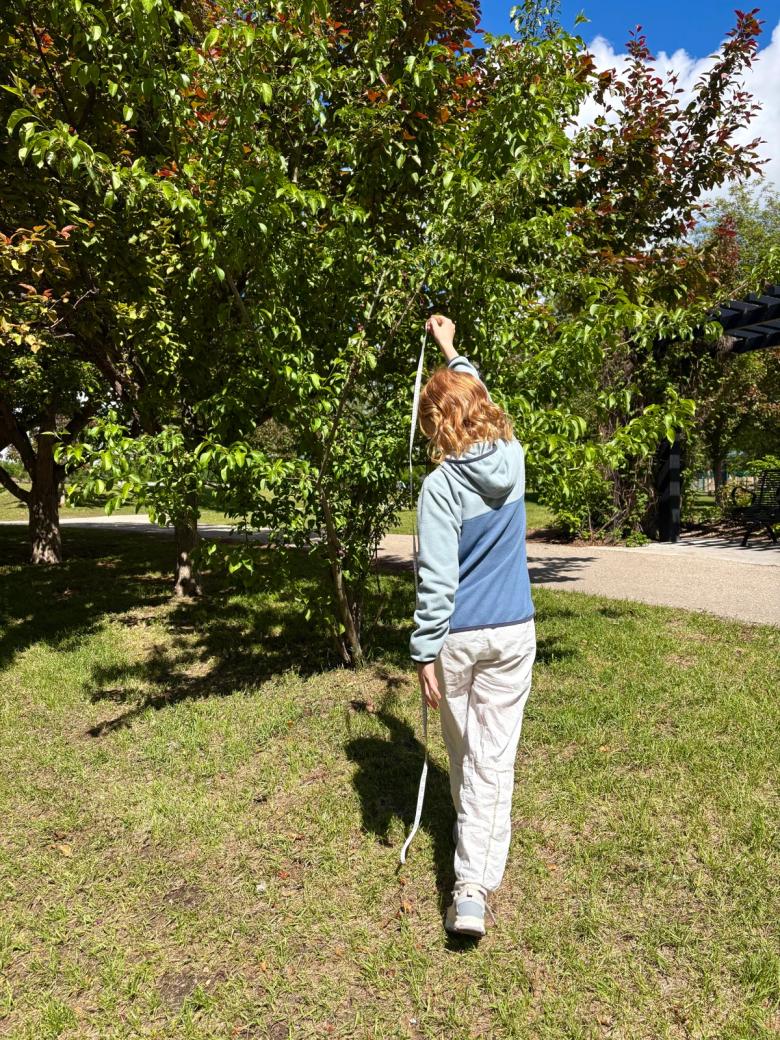
A measuring tape is another affordable and easy way to get kids thinking about math while enjoying the warm summer weather! One idea is to make a “scavenger hunt” list of nature items to find before heading outside, then use it to guide the math activity. How many metres do we estimate that tree to be? What is the longest flower stem in grandma’s garden? How many inches is the black rock compared with the grey rock by the river? Alternate the units used for certain items to teach conversions between Imperial and metric systems – millimetres, centimetres, decimetres, inches, and feet. Which unit makes the most sense to use when measuring a worm versus a branch from the birch tree?
In addition to measuring activities outside, children can be prompted to search for certain types of leaves in particular quantities or shapes, line sticks up in order from longest to shortest, or notice how many pinecones it takes to fill a 1-litre container or bucket. How many flowers with 5 petals each can we find at the neighbourhood park? This place-based approach to learning outside is not only a fun way to keep children’s mathematical inquiry active during summer vacation, but it also builds their appreciation for the local environment and the beautiful details found in nature.
Get to know shape names through sensory play
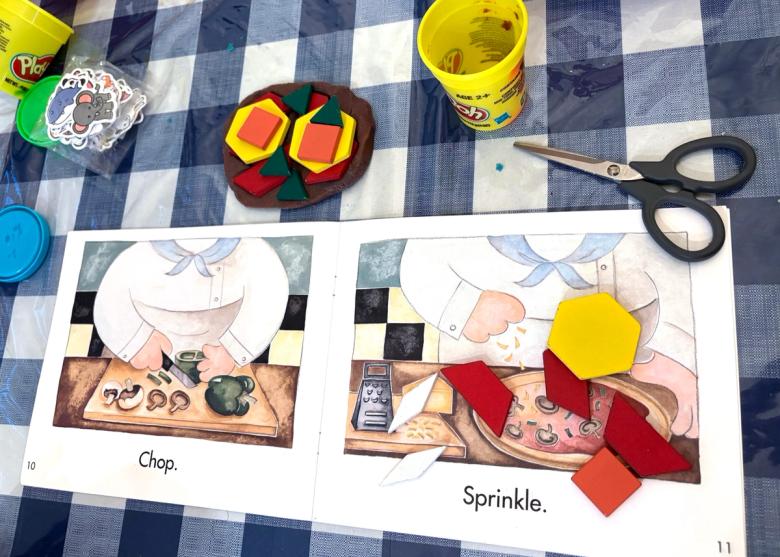
Most kids have buildable materials at home that they may have neglected during the school year, or they may use their toys the same way every time they play, and you may want to introduce something new to how they interact with these items. Wooden blocks, Lego or Duplo, geometric shapes, cookie cutters, magnetiles, puzzle pieces, or even stones from outside can teach shape-related vocabulary. When paired with sensory elements such as Play-Doh, kinetic sand, water, shaving cream, bubble bath, or dried pasta, these toys can spark a whole new level of engagement for children. If you have books from home or the library that use shapes and colours in the illustrations, offer them alongside the shape and sensory play to add a layer of literacy. As shown in the example picture below, Play-Doh was used with a geometric shape set and a book to make a pretend pizza while following along with an Early Reader book for a simple activity that incorporated sensory play, literacy, and mathematical awareness.
As the grownup, you can prompt children to identify the shapes during play, and challenge them to make connections between 2D and 3D structures and designs. Depending on your budget and toy collection, K’Nex, toothpicks and marshmallows, cardboard pieces, and magnetiles are great options for exploring how many squares you need to make a cube or how many surfaces you can count after building a rectangular prism. What shapes are needed to build a house or an apartment building, and can a cylinder be the chimney? Ask children what they think can be done with the sensory substance too – will it be contained within the structure we build (e.g., sand inside a box) or does it need to be used to hold the pieces together (e.g., marshmallows being the “glue” to hold toothpicks together)? Set up these materials and allow yourself to be surprised by children’s innovation and ingenuity!
Categorize items by colour, size, texture, function, theme, etc.
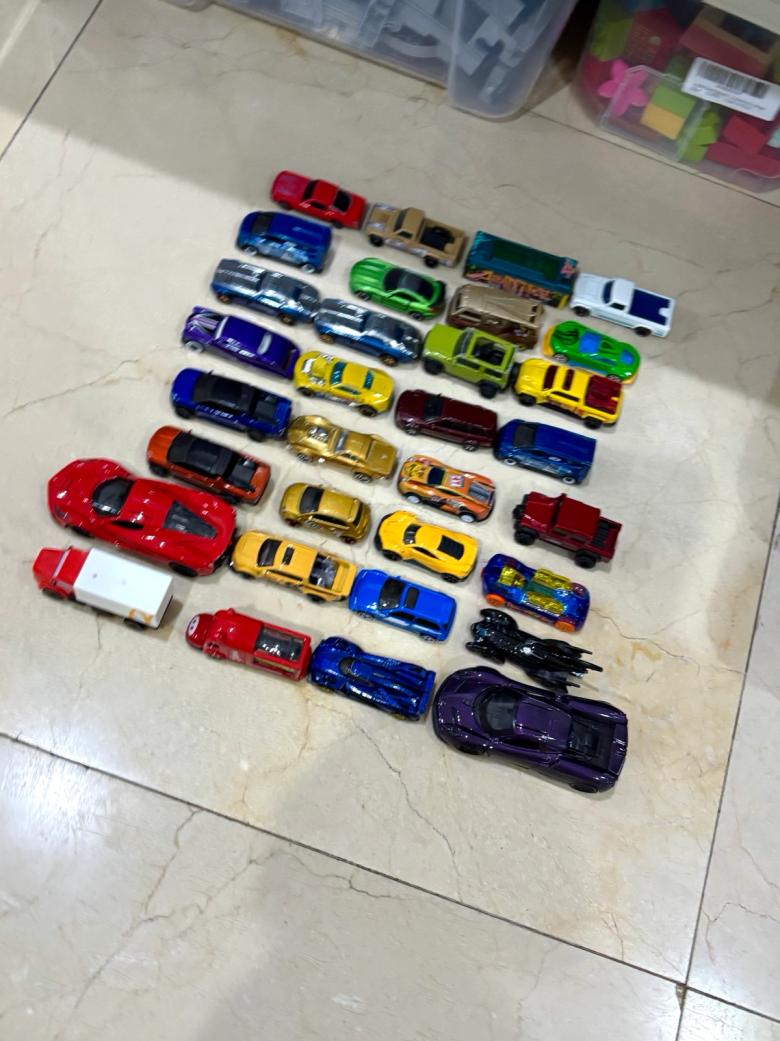
This activity doesn’t have any expense because you can use whatever is nearby – indoors, outdoors, or even virtually through the use of apps or Google searches. Finding practical ways to promote children’s counting and categorizing skills is foundational to later acquiring more complicated math skills. For instance, children need to learn one-to-one correspondence (e.g., each object receives a number that increases the overall quantity) to do basic addition, subtraction, graphing, and patterns. Even early multiplication shortcuts can be learned by placing toys in rows of equal values (see the picture of 4 cars in 8 rows below). Role modelling counting aloud in different languages can also be good practice, particularly for young children still learning number vocabulary. Get used to counting how many eggs are cooked for breakfast, how many pairs of shoes are at the front door, how many toys go into the bin during cleanup, or how many books will be read before bedtime. Incorporating counting activities in naturalistic ways throughout the day helps children conceptualize the real-world relevancy of numbers and makes learning fun!
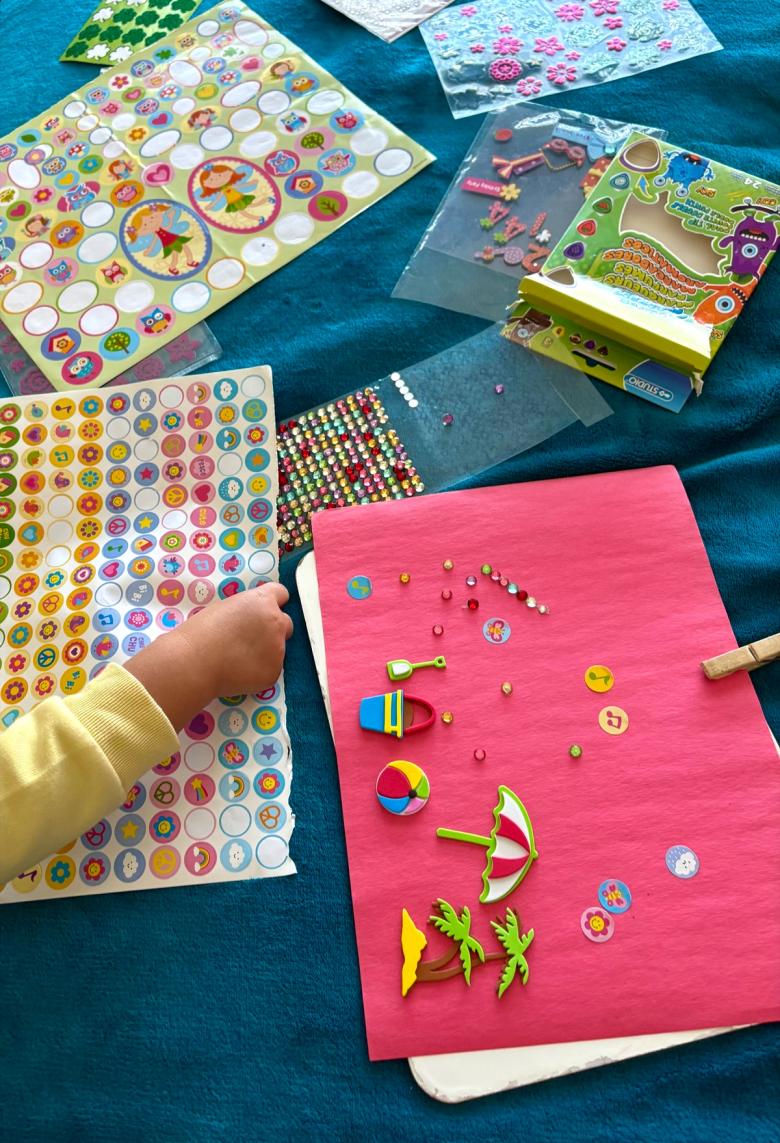
Categorizing can be woven into daily life in much the same way. Instead of counting materials or objects, however, children are supported in making groups of materials that share similar characteristics. Stickers are an easy way to practice fine motor skills while also guiding children to identify how certain images, shapes, or sizes can be grouped. For example, the child in the image below is placing gemstone stickers together on the page beside beach-themed stickers. You can take this activity off the page by asking children to group toys or other objects into bins or baskets by texture (fuzzy versus plastic), size (small, medium, and large), function (zippers or buttons), or theme (art supplies versus puzzles). Categorizing activities teach organization and critical thinking, and children can also learn about opposites, ordering, spatial awareness, estimation, and magnitude in hands-on ways!
Making math meaningful in children’s daily lives
This blog post offers ideas for low-cost math activities to do at home or in the community that support the learning mindset young children need during the first weeks of back-to-school. By gradually revisiting and incorporating math through hands-on activities in the last weeks of summer break, parents and caregivers can help children adjust to the upcoming change in routine and academic expectations, leading to greater success and support in the upcoming school year.